
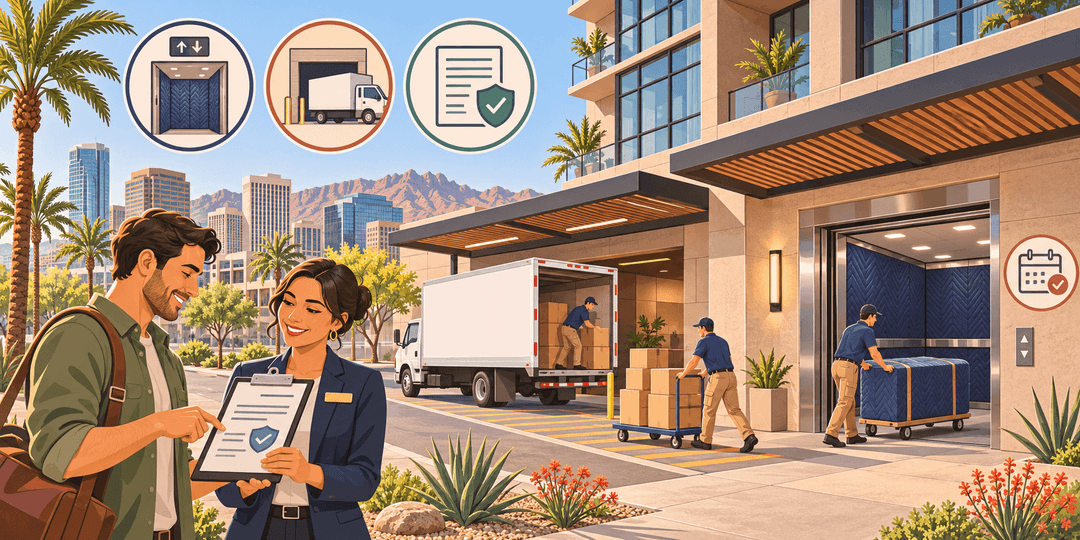
Moving Into a Downtown Phoenix High-Rise: Elevators, Docks, and COIs
Moving Into a Downtown Phoenix High-Rise: Elevators, Docks, and COIs
Downtown Phoenix has added a steady stream of residential towers and mid-rise condo buildings over the past decade, and many of the people moving into them are doing it for the first time. Buying a condo near Roosevelt Row or along the Central Avenue corridor feels a lot like buying a house until moving day arrives. That is when buyers discover that a high-rise move runs on the building's schedule, not their own.
In a single-family home, the only real constraints are the driveway and the weather. In a managed tower, the move has to fit around freight elevator reservations, loading dock hours, insurance paperwork, and rules designed to protect shared spaces and neighbors. None of these requirements are difficult on their own. The problem is that most new owners learn about them a few days before the move, when the best time slots are already taken.
Here is what to sort out before moving into a Downtown Phoenix high-rise, and why each item matters.
Reserve the Freight Elevator Before Anything Else
The freight elevator is the single biggest constraint in a high-rise move. Most buildings allow only one move at a time, and they hand out elevator time in fixed blocks, often two to four hours. At the end of the month, when leases turn over and closings stack up, those blocks can be booked weeks in advance.
Contact the building manager or HOA as soon as the closing date is set and ask:
- Which days and hours are moves permitted? Many buildings restrict moves to weekdays or exclude Sundays and holidays.
- How long is a reservation block, and can two blocks be booked back to back?
- Is there a refundable deposit or a move-in fee, and when is it due?
- Will the elevator be padded and keyed off for exclusive use during the reservation?
- What happens if the move runs past the reserved window?
That last question matters more than it seems. If the crew is still loading when the block ends, the building may hand the elevator to the next resident, and the remaining furniture waits in the lobby or goes back on the truck. Booking a longer block than you think you need is cheap insurance.
If you are moving out of one tower and into another on the same day, coordinate both reservations at once. A morning slot at the old building and an afternoon slot at the new one, with enough buffer for drive time and unloading, keeps the day from collapsing.
Get the Certificate of Insurance Right the First Time
Almost every managed residential building in Downtown Phoenix requires a certificate of insurance, usually called a COI, from any moving company working on the property. It is the item first-time condo buyers are least likely to have heard of, and the one most likely to stop a move at the front desk.
A COI is a document issued by the mover's insurance carrier proving the company carries active coverage. Buildings require it so that if a crew damages a lobby wall, an elevator cab, or a neighbor's door, the repair is covered by the mover's policy rather than the HOA or the other residents.
The details are where moves go wrong. Building management typically provides a sample COI or a written list of requirements, which can include:
- Minimum general liability limits, often stated per occurrence and in aggregate
- Proof of workers' compensation and auto liability coverage
- The HOA, management company, or building owner listed as "additional insured," using their exact legal names
- The building's address listed as the certificate holder's address
Ask the building for its requirements in writing and send them directly to your mover. A reputable company will have its insurance agent issue a certificate that matches. Plan for a few business days of turnaround, and confirm with management that the COI has been received and approved before moving day. A certificate that names the wrong entity or lists a lower limit than required is treated the same as no certificate at all.
If a mover hesitates when asked for a building-specific COI, treat it as a warning sign. Properly insured local moving companies handle these requests routinely.
Know Your Loading Dock Window and Truck Limits
The loading dock is shared with everything else that keeps a tower running: grocery and package deliveries, trash pickup, maintenance vendors, and other residents' furniture deliveries. Many buildings schedule dock time together with the elevator reservation, but some manage it separately, so confirm both.
Questions worth asking:
- What is the maximum truck height and length the dock or garage entrance can handle? Some downtown buildings have clearance limits that rule out a full-size moving truck.
- If a large truck cannot use the dock, where is it allowed to park, and does the building require a curbside arrangement with the city?
- How far is the walk from the dock to the freight elevator, and are there ramps, tight corners, or security doors along the way?
- Does the building require a staff member or security officer to be present during the move?
Pass every answer to your moving company before the crew is scheduled. A mover who knows about a low clearance or a long hallway can send the right truck size and the right number of people, which keeps the move inside your reserved window.
Plan Around Downtown Phoenix Conditions
Even with every reservation confirmed, a downtown move has local factors that a suburban move does not.
Heat: From late spring through early fall, early morning slots are the most valuable in the building. Crews work faster in cooler air, and electronics, candles, artwork, and medications fare better when they are not sitting in a hot truck through the afternoon. If the building offers a 7 or 8 a.m. block, take it.
Event days: Games and concerts at Footprint Center and Chase Field, along with convention activity downtown, can slow traffic and fill nearby streets. Check the event calendars before choosing a date, especially for an afternoon or evening slot.
Light rail and one-way streets: Valley Metro light rail runs through the core, and several downtown streets are one-way. A truck that misses its turn can lose valuable minutes circling back to the dock. Share the exact dock entrance with your mover rather than just the building's street address.
Common area protection: Expect the building to require floor runners, wall and door frame protection, and padded elevator walls. Some buildings inspect hallways before and after the move and deduct any damage from the deposit. Photograph the route from dock to unit before the crew arrives.
Measure before you buy: Freight elevators are larger than passenger cars, but they are not unlimited. Measure the elevator door and cab, plus your unit's entry door and any tight hallway turns, before moving a large sectional, a king bed frame, or a piano. Furniture that does not fit costs time you have already reserved.
A Simple High-Rise Move Checklist
- Request the building's move policy in writing as soon as the closing date is set.
- Reserve the freight elevator and loading dock, with a longer block than you think you need.
- Send the building's COI requirements to your mover and confirm management has approved the certificate.
- Confirm truck clearance, parking rules, and the exact dock entrance.
- Pay any move-in fee or deposit and ask whether a staff member must be present.
- Measure the elevator, entry door, and large furniture.
- Choose an early morning slot and check downtown event calendars.
- Photograph common areas before the move begins.
The Bottom Line
High-rise living in Downtown Phoenix offers walkability, views, and easy access to the city's restaurants and venues. Getting into the building smoothly is mostly a matter of starting early and asking the right questions. Buyers who request their building's rules in writing, book elevator time the moment their closing is confirmed, and work with experienced local moving services that handle COIs and dock scheduling routinely tend to finish move-in day on schedule, with their deposit intact and their new neighbors none the wiser.