
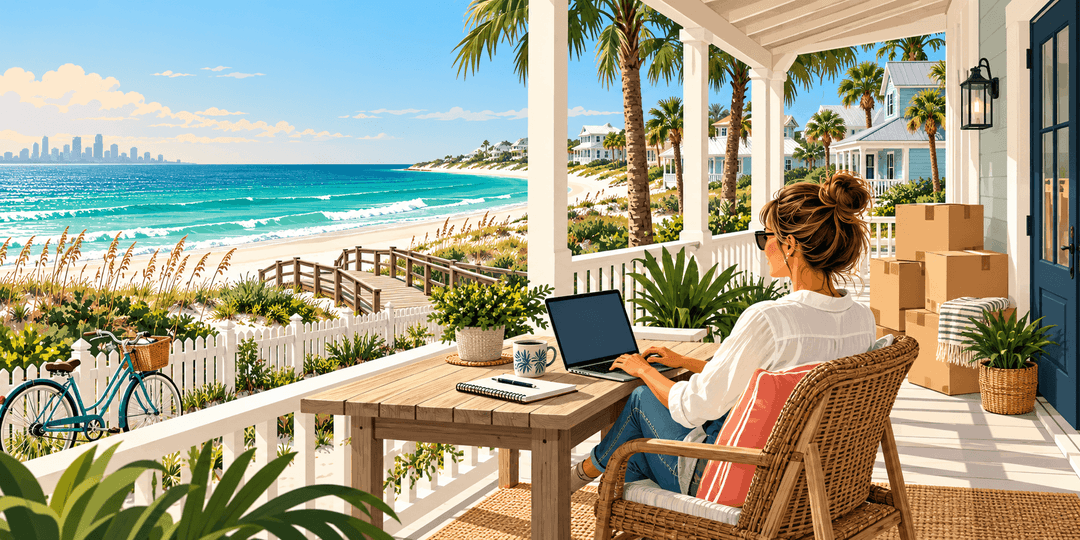
Moving to 30A for Remote Work: Trading the City for the Emerald Coast
The rise of remote work has rewritten where people can live, and for a growing number of professionals, the answer is somewhere they once could only visit on vacation. Florida's 30A corridor, with its sugar-white sand, turquoise water, and charming beach towns, has become a genuine destination for remote workers ready to trade a city commute for morning walks on the beach.
If you can do your job from anywhere, why not do it from the Emerald Coast? But making 30A work as a full-time base rather than a vacation spot takes some planning. Here is a guide for remote workers considering the move.
Why Remote Workers Are Choosing 30A
The appeal is easy to understand. 30A offers a lifestyle that most people associate with vacation, beautiful beaches, a relaxed pace, outdoor recreation, and a genuine sense of community, and remote work makes it possible to live that way year-round. Instead of squeezing the coast into a week each summer, you get to make it your everyday backdrop.
The draw goes beyond the scenery. 30A's walkable, bike-friendly beach communities, its farm-to-table dining, boutique shopping, and strong community character create a quality of life that is hard to match. For professionals who have spent years in traffic and cubicles, the ability to structure a workday around the beach, the trails, and the coastal dune lakes is a powerful motivator. And Florida's lack of a state income tax is a meaningful financial bonus for anyone bringing a salary from elsewhere.
Making Sure You Can Actually Work
The single most important practical consideration for any remote worker is connectivity. Before you commit to a specific home or community, confirm that you will have reliable, high-speed internet at that exact address. Internet availability and speeds can vary along the corridor and in different communities, so this is not something to assume, it is something to verify.
Do not rely on the town-level picture; check the specific property. Ask about the available providers, the speeds, and whether the connection is robust enough for video calls, large file transfers, and whatever else your work demands. If your livelihood depends on being online, a strong, dependable connection is non-negotiable, and it should be near the top of your checklist when evaluating homes.
Beyond your home connection, it helps to know your backup options. Identify nearby spots with reliable Wi-Fi, coffee shops, coworking-style spaces, or community areas, where you can work if your home connection goes down or you simply want a change of scenery.
Choosing the Right Community for Remote Life
Which part of 30A suits you depends on how you want your workday and downtime to feel. The corridor's communities each have their own character, from the artistic, laid-back vibe of Grayton Beach to the planned, walkable design of Seaside and WaterColor to the more secluded, upscale feel of other areas. Inland Santa Rosa Beach and the broader South Walton region offer more attainable options slightly removed from the beachfront premium.
For a remote worker, think about the balance you want between focus and lifestyle. Do you want to be steps from the beach and the buzz, or in a quieter setting better suited to concentration? Consider proximity to the amenities you will use daily, and remember that the corridor's character shifts with the seasons, quieter and more local in the off-season, busier during the spring and summer peak. Spending time in a community before committing helps you gauge whether its rhythm fits your work life.
The Realities of Full-Time Coastal Living
Living on 30A full-time is different from vacationing there, and remote workers should go in prepared. Peak season brings crowds and traffic along Highway 98 and 30A, which affects everything from errands to your sense of quiet during the workday. Housing on the corridor commands premium prices, particularly in the sought-after beach communities, and much of the market is oriented toward second homes and rentals, so research your options carefully.
There are coastal realities too. Hurricane season runs June through November, so understanding flood zones, evacuation routes, and storm preparation is part of living here. The salt air and humidity affect homes and belongings over time, requiring some ongoing care. None of this diminishes the appeal, but arriving informed rather than surprised makes for a smoother transition into full-time coastal life.
Setting Up Your Home Office
Once you have found the right place with reliable internet, plan your home office setup thoughtfully. A dedicated, comfortable workspace is essential when your home is also your office, and it is worth prioritizing a spot with good light and minimal distraction, ideally not one where the beach view tempts you away from your screen all day, though a little inspiration never hurts. If you are moving a full home office, coordinate the transport of your equipment, desk, and technology carefully so you can be up and running quickly at the new place, since downtime for a remote worker means lost productivity.
Planning Your Move to 30A
A move to 30A, often a long-distance relocation, benefits from local knowledge, especially given the corridor's logistical quirks: narrow streets, homes elevated on stilts, and HOA rules in many beach communities. Working with experienced 30A movers who understand both the long-distance logistics and the specific challenges of the Emerald Coast, including its community access rules and coastal-humidity considerations, takes the stress out of the move so you can focus on setting up your new life and getting back to work quickly.
The bottom line is that moving to 30A for remote work is a genuinely appealing proposition, the chance to trade a city commute for coastal living while keeping your career intact. The keys are practical: verify reliable high-speed internet at your specific address, choose a community that fits your work-life balance, prepare for the realities of full-time coastal living, and set up a proper home office. Plan the move with experienced local help, and you can turn the dream of working from the Emerald Coast into a productive, sustainable everyday reality.