
Moving to Hawaii from the Mainland: What Nobody Tells You About Shipping Your Stuff
Most people planning a move to Hawaii spend months thinking about the big picture. Which island? Which neighborhood? How will the cost of living compare? What will the job market look like? Those are the right questions, but they tend to crowd out a more practical one that catches almost everyone off guard: how, exactly, does your stuff get there?
On the mainland, a move is a truck. You pack, the truck shows up, and a few days later it pulls into your new driveway. Moving to Hawaii does not work that way, because every couch, box, and bicycle you bring has to cross roughly 2,500 miles of open Pacific Ocean. That single fact changes your timeline, your budget, how you pack, and what is even worth bringing.
This guide walks through the parts of shipping your belongings to Hawaii that rarely make it into the glossy "moving to paradise" articles: how your shipment actually travels, how long it really takes, how costs are calculated, what you should leave behind, and how to avoid the most common (and most expensive) mistakes.
Your Belongings Travel by Ship, Not Truck (and That Changes Everything)
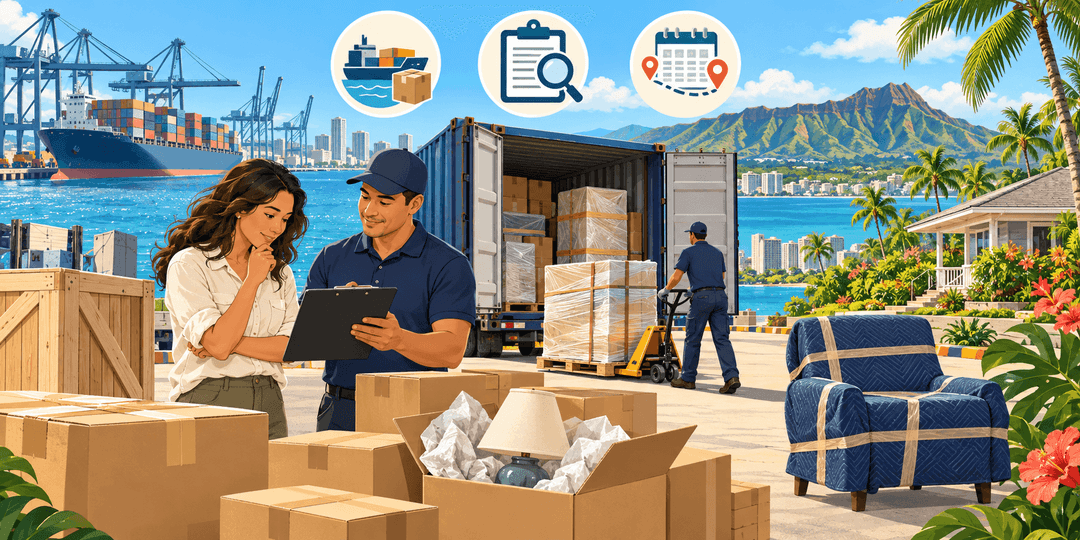
A mainland-to-Hawaii move is really three or four moves stitched together. First, your belongings are packed and loaded at your current home. Next, they are trucked to a West Coast port, typically in Southern California, the Bay Area, or the Pacific Northwest. Then they sail across the Pacific in a steel ocean container. Finally, they are unloaded in Honolulu and trucked to your new home, or transferred onto a barge if you are headed to Maui, Kauai, or the Big Island.
Every one of those handoffs adds time, cost, and a chance for something to go wrong. That is why Hawaii moves need more planning than even a cross-country move on the mainland.
It also helps to know that only a small number of ocean carriers run regular service between the West Coast and Hawaii, with Matson and Pasha Hawaii being the two names you will hear most often. Part of the reason the field is so small is the Jones Act, a federal law that requires cargo moving between two U.S. ports to travel on ships that are U.S.-built, U.S.-owned, and U.S.-crewed. Fewer eligible ships means fewer options and, in most cases, higher shipping prices than people expect. You cannot shop around the way you might for a mainland moving truck.
The practical takeaway: when you get a quote for a Hawaii move, you are not just paying for movers and a truck. You are paying for packing, inland transport, port handling, ocean freight, and final delivery, and each piece needs to be coordinated with the others.
It Takes Longer Than You Think
Here is where many new arrivals get their first surprise. The ocean crossing itself is fairly quick. Matson, for example, lists roughly five to seven sailing days from the West Coast to Hawaii. But the sailing is only one piece of the timeline.
Before the ship leaves, your shipment has to be packed, picked up, trucked to the port, and loaded on a scheduled sailing. If you are moving from the Midwest or the East Coast, the trip to the West Coast alone can take a week or more. After the ship arrives, the container has to be unloaded, released, and delivered. If you are moving to a neighbor island, add an inter-island barge, which may sail on a weekly or even monthly schedule depending on the carrier and the island.
Plan for a Few Weeks Without Your Furniture
The smartest thing you can do is assume you will arrive before your belongings do. Many people fly out the same week the movers load the truck, which means two to five weeks in Hawaii with nothing but what fit in their suitcases.
To make that gap comfortable, pack a "first month" kit that travels with you or ships by air: work laptop and chargers, important documents, a few changes of clothes, basic kitchen items, bedding, medications, and anything your kids cannot live without. Some families rent a furnished place for the first month, or borrow air mattresses and folding chairs while they wait.
Bridging the Gap With Storage
Storage can solve timing problems on either end. If you have to leave your mainland home before your Hawaii lease starts, your mover can hold your shipment in storage until you are ready. If you arrive and your new home is not available yet, storage on the island lets you schedule delivery for the day you get the keys instead of paying daily fees at the port.
How Shipping Costs Are Actually Calculated
On a mainland move, price is usually driven by weight and distance. Ocean shipping adds another factor that matters just as much: space. Your belongings travel in containers, and containers are priced largely by size. That means a lightweight but bulky item, like a sectional sofa or a flat-pack bookcase, can cost more to ship than it would cost to replace once you arrive.
A few pricing factors to understand before you request quotes:
- Volume and weight: Most Hawaii quotes start with an estimate of how many cubic feet your belongings will occupy, along with their weight. The more accurately your inventory is measured, the more accurate your quote.
- Full container vs. shared space: If you have a full household, a dedicated container may make sense. Smaller moves can sometimes travel in shared or consolidated space, which costs less but may take longer because the shipment waits for other cargo.
- Inland legs on both ends: Trucking to the West Coast port and from the Hawaii port to your door are separate costs. On a port-to-port booking, you arrange these yourself.
- Port time limits: Carriers give you a limited window to pick up and return a container before daily charges begin. Matson, for example, allows a set number of free days in Hawaii before storage or detention fees apply.
- Access at your new home: Long carries, stairs, narrow streets, condo elevator reservations, and building move-in rules can all add labor time. In dense parts of Honolulu, these details matter a lot.
- Neighbor island delivery: Shipping to Maui, Kauai, or the Big Island usually means an additional barge leg and handling charge.
Why a Real Survey Beats an Online Calculator
Online moving calculators are useful for a rough number, but they are a poor fit for Hawaii moves. They rarely account for inland trucking, port fees, or the access quirks of your new home. A video or in-home survey lets an estimator see what you actually own, flag items that are not worth shipping, and give you a binding or guaranteed price you can budget around.
When you compare quotes, make sure each one covers the same thing: door-to-door, with packing, ocean freight, and final delivery included.
Door-to-Door vs. Port-to-Port: The Choice That Decides Your Stress Level
There are two basic ways to get your belongings to Hawaii, and the one you choose shapes the entire experience.
Port-to-port means you book space with an ocean carrier and handle everything else yourself. You (or helpers you hire) pack and load the container, arrange a trucker to haul it to the West Coast port within the carrier's time window, and then arrange another trucker in Hawaii to pick it up, bring it to your home, and return it empty before free time runs out. Carriers that offer this service generally do not provide the trucking on either end, so you will be coordinating several companies at once.
Port-to-port can save money, especially for people who live near a West Coast port and are comfortable managing logistics. But it puts every detail on your plate: the packing quality, the paperwork, the timing, and any damage claims.
Door-to-door means one moving company manages the whole chain: packing at your current home, loading, inland transport, ocean freight, port handling, and delivery to your new address in Hawaii. You get one point of contact, one schedule, and one company responsible if something goes wrong.
For most families relocating a full household, door-to-door is worth the difference. Working with trusted Hawaii movers who handle mainland relocations regularly means someone who already knows the sailing schedules, port rules, and island delivery quirks is managing the timeline for you, which frees you up to focus on the rest of your move.
Whichever option you choose, ask any company you are considering how they handle the ocean leg, whether they use their own crews or subcontractors on each end, and what protection coverage applies while your shipment is at sea.
The Stuff You Shouldn't Bring
Because you pay for every cubic foot that crosses the ocean, a Hawaii move is the best excuse you will ever get to edit your belongings ruthlessly. Here is what tends to be more trouble than it is worth.
Oversized Furniture
Homes in Hawaii, especially condos and apartments in Honolulu, are often smaller than comparable mainland homes. Narrow lanai doors, compact floor plans, and elevators that must be reserved in advance can make a giant sectional or king-size sleigh bed a real headache.
Before you ship a large piece, measure your new space and the doorways leading to it. If it will not fit comfortably, it is usually cheaper to sell it and buy something sized for island living.
Items That Struggle in Humidity and Salt Air
Hawaii's warm, humid climate and salty breezes are hard on certain materials. Particleboard and pressed-wood furniture can swell and sag. Some leather goods, untreated wood, and unprotected metal can develop mold or corrosion. Paper archives, old photographs, and books need careful storage once you arrive. You do not have to leave all of these behind, but think twice before paying to ship inexpensive furniture that may not last.
Plants, Soil, and Some Foods
Hawaii takes biosecurity seriously because invasive pests can devastate its agriculture and native ecosystems. Agricultural items, including plants, plant parts, soil, and some foods, are inspected on arrival, and plants must be free of soil, pests, and signs of disease. A long list of plants is restricted or requires permits, including pineapple, palm, orchid, bromeliad, coconut, and coffee plants. Check the Hawaii Department of Agriculture and Biosecurity's guidance for shipping from the mainland before you pack anything green.
In practice, most people find it easier to give houseplants to friends before they leave and start a new collection on the island. Also clean outdoor items like patio furniture, grills, bicycles, and garden tools thoroughly so they do not carry soil or hitchhiking insects.
Hazardous Items
Moving companies and ocean carriers will not accept flammable, explosive, or corrosive materials. That includes propane tanks, gasoline, paint thinner, aerosols, fireworks, ammunition, pool chemicals, and some batteries. Use them up, give them away, or dispose of them safely before moving day, and replace them after you arrive.
A Simple Sell, Store, or Ship Test
For each large item, ask three questions:
- Will it fit and function well in my new home and climate?
- Would it cost more to ship than to replace in Hawaii?
- Does it have sentimental or real monetary value that cannot be replaced?
If the answers are no, yes, and no, sell or donate it. If you are not sure yet, storage on the mainland can buy you time to decide after you have settled in.
Shipping Your Car Is a Separate Process
Many people assume their car can ride along in the container with their furniture. Usually it cannot. Carriers like Matson do not allow a personal vehicle inside a household goods container on their Hawaii routes, so your car will almost always ship separately, on its own booking and often on its own schedule.
Vehicle transit times also run longer than you might expect. Matson's vehicle FAQ estimates about 9 to 24 days to Honolulu from the sail date, and 33 to 45 days to Maui, Kauai, or the Big Island, because cars bound for the neighbor islands continue on a barge that sails from Honolulu about once a month. If you need a car the day you land, plan on a rental or ship your car well ahead of your own arrival.
Getting Your Car Ready
Requirements vary by carrier, so always confirm with yours, but most will ask you to:
- Keep the fuel tank low, typically a quarter tank or less.
- Wash the car, inside and out, including the undercarriage, so it does not carry soil or pests.
- Remove personal belongings, loose items, and aftermarket accessories like bike racks.
- Bring your registration, title or lienholder authorization, and photo ID to drop-off.
- Document the car's condition with dated photos before you hand over the keys.
Registering Your Car in Hawaii
Once your car lands, a clock starts. Hawaii generally gives new arrivals about 30 days from the vehicle's arrival to either register it in Hawaii or get an out-of-state permit. Either way, you will need a Hawaii safety inspection first. Keep your bill of lading or shipping receipt, because it proves the arrival date. Each county runs its own motor vehicle office, so check the requirements for Maui County, Hawaii County, or your own county before you arrive.
Ship It or Sell It?
Shipping a car to Hawaii can easily cost well over a thousand dollars from the West Coast, and more from farther inland. Used cars in Hawaii also tend to cost more than on the mainland, so shipping often makes sense for a newer, reliable vehicle you plan to keep. For an older car, a gas-hungry truck, or a vehicle you were planning to replace anyway, selling before you move and buying on-island may be simpler. Island driving distances are short, so many families also find they can get by with one car instead of two.
Packing for the Ocean Is Different From Packing for the Road
A box that survives a two-day truck ride across town may not survive a multi-week journey that includes trucks, cranes, a container ship, port handling, and possibly a barge. Ocean shipments are handled more times, shift more in transit, and sit in a sealed metal box through changing temperatures and humidity. Packing needs to match.
Use Stronger Materials
Skip used grocery boxes and thin cardboard. Use new, double-walled moving boxes, and fill every box completely so it does not crush when stacked. Wrap furniture in moving blankets and stretch wrap, protect corners with cardboard, and disassemble anything that can be taken apart, such as bed frames, tables, and armoires. Fragile items like mirrors, artwork, and glass tabletops should go in custom crates or specialty boxes.
Fight Moisture Before It Starts
Moisture is one of the biggest risks on an ocean move. A container can build up condensation as it travels from a cool mainland port into warm, humid air. To protect your belongings:
- Make sure everything is completely dry before it is packed, especially outdoor furniture, tents, and anything recently cleaned.
- Defrost and dry refrigerators and freezers at least a day ahead and leave the doors propped open.
- Add moisture-absorbing desiccant packs to boxes holding electronics, documents, leather, and clothing.
- Seal important papers and photos in plastic bins or zip-top bags.
Label and Inventory Everything
With so many handoffs, a detailed inventory is your best protection. Number every box, list its contents and destination room, and mark fragile items clearly. Take photos of valuable items and furniture before they are packed. Professional movers often use barcode tracking and photo inventories, which make it much easier to confirm everything arrived and to file a claim if something did not.
Understand Your Protection Coverage
Before your shipment is sealed, ask exactly what coverage applies. Basic carrier liability is often calculated per pound, which may pay only a small fraction of an item's real value. Full-value protection or third-party coverage costs more but can make sense for a full household crossing the ocean. Read the terms, note any exclusions for items you packed yourself, and keep a list of high-value items you want declared separately.
Timing Your Move Around Island Realities
When you move matters almost as much as how. A few timing factors are worth building into your plan.
Peak moving season: Summer is the busiest time of year for movers nationwide, and Hawaii is no exception. Military PCS season, school breaks, and job transfers all cluster between May and August. Expect tighter availability and higher prices. If you have flexibility, spring and fall moves are often easier to book.
Hurricane season: The Central Pacific hurricane season runs from June 1 through November 30. Storms do not hit Hawaii often, but weather can delay sailings, slow port operations, and push back delivery dates. Build a little cushion into your schedule during these months.
Holidays: Port and carrier schedules slow down around major holidays, especially in late November and December. A shipment that leaves the mainland just before the holidays may sit longer than you expect.
Your own deadlines: Work backward from the date that matters most, whether that is a lease start, a new job, the first day of school, or a military report date. For a full household, start talking to movers at least two to three months ahead. That gives you time to compare quotes, sort what to bring, schedule your car's shipment, and line up temporary housing if your belongings arrive after you do.
What Happens When Your Shipment Arrives
The final leg is where all that planning pays off, or where small oversights turn into extra fees.
On Oahu, your container or shipment is unloaded in Honolulu, released after any required inspections, and delivered to your new address. If you booked port-to-port, you need a trucker ready to pick up the container within the carrier's free time. Matson, for instance, gives a limited number of days in Hawaii to pick up, unload, and return a household goods container before daily charges kick in. If you booked door-to-door, your mover schedules the delivery with you.
On the neighbor islands, your shipment typically arrives in Honolulu first and then continues by barge to Kahului, Nawiliwili, or Hilo. That extra leg adds time and handling, so confirm the barge schedule when you book.
Before delivery day, check whether your building requires a certificate of insurance, an elevator reservation, or specific move-in hours. Many Honolulu condos do. Make sure the moving truck has somewhere to park, since narrow streets and limited parking are common.
On delivery day, check every numbered item against your inventory as it comes off the truck. Inspect furniture and boxes for visible damage and note anything unusual on the delivery paperwork before you sign. Take photos right away. Most protection plans have deadlines for filing claims, so do not wait weeks to unpack the boxes that matter most.
After delivery, your mover may offer unpacking, furniture reassembly, and TV or electronics installation. After weeks of living out of a suitcase, having beds assembled and the kitchen unpacked on day one can make your new house feel like home much faster.
The Bottom Line
Moving to Hawaii from the mainland is very doable. Thousands of people do it every year. The ones who have the smoothest experience are rarely the ones with the biggest budgets. They are the ones who understood early that an island move is an ocean move, and planned for it.
If you remember only three things, make them these:
- Start early. Give yourself two to three months to compare quotes, schedule your car, and line up a plan for the weeks before your belongings arrive.
- Bring less than you think. Every cubic foot costs money to ship, and island homes and climate favor a lighter, smaller household.
- Get a complete, door-to-door quote. Make sure it covers packing, inland transport, ocean freight, port handling, and delivery, so there are no surprises when your shipment lands.
Get those right, and the only thing left to worry about is which beach to visit first.