
Renting Out a Room for the First Time: What I Wish Every New Landlord Knew
The first time you rent out a room in your own home, it feels a bit like inviting a stranger to move into your life. Because, well, that's exactly what you're doing.
I've spent years helping people find flatmates and rent out rooms, and I've seen it go both ways. Some first-time landlords end up with a flatmate who becomes a close friend and pays rent on time for years. Others end up with late payments, dishes piling up in the sink, and a very awkward conversation six weeks in.
The difference usually isn't luck. It's a handful of decisions made before anyone moves in. So here's everything I wish someone had told every new landlord on day one, in plain language and in the order you'll actually need it.
Be honest with yourself first
Before you write a single word of your listing, ask yourself a simple question: am I okay sharing my kitchen, my bathroom, and my evenings with someone I don't know yet?
The extra income is real. For a lot of people, a spare room covers a big chunk of the mortgage or rent. But money alone isn't a good enough reason if you hate the idea of someone else's shoes by the door.
Think about how you live now. Do you work from home? Do you go to bed early? Do you have a dog, a partner who stays over, or a habit of playing guitar at midnight? None of that is a deal-breaker. You just need to know it, so you can find someone who fits.
It's also worth checking the boring stuff early. If you rent your place, read your lease, since some don't allow subletting without permission. If you own, check your mortgage terms and call your home insurance provider. Many policies need to know about a paying tenant, and finding out after something goes wrong is no fun. Local rules for renting out rooms vary a lot between cities and states, so a quick search for your area is worth ten minutes.
Price it like a renter would
The most common mistake I see is pricing the room based on what you need rather than what the room is worth.
Here's a simple way to do it. Search for rooms for rent in your neighborhood and write down five or six that are genuinely similar to yours. Look at the size, whether it's furnished, whether it has its own bathroom, and what's included. Then place yourself honestly in that range.
A few things that justify charging more: a private bathroom, utilities and Wi-Fi included, parking, laundry in the home, or being close to transit or a university. A few things that push it down: a shared bathroom with several people, a small room with no closet, or a long commute.
If your price is fair, you'll get replies within days. If you hear nothing for two weeks, the market is telling you something.
Get the room ready (and photograph it well)
You don't need to renovate. You do need the room to look like somewhere a person would want to live.
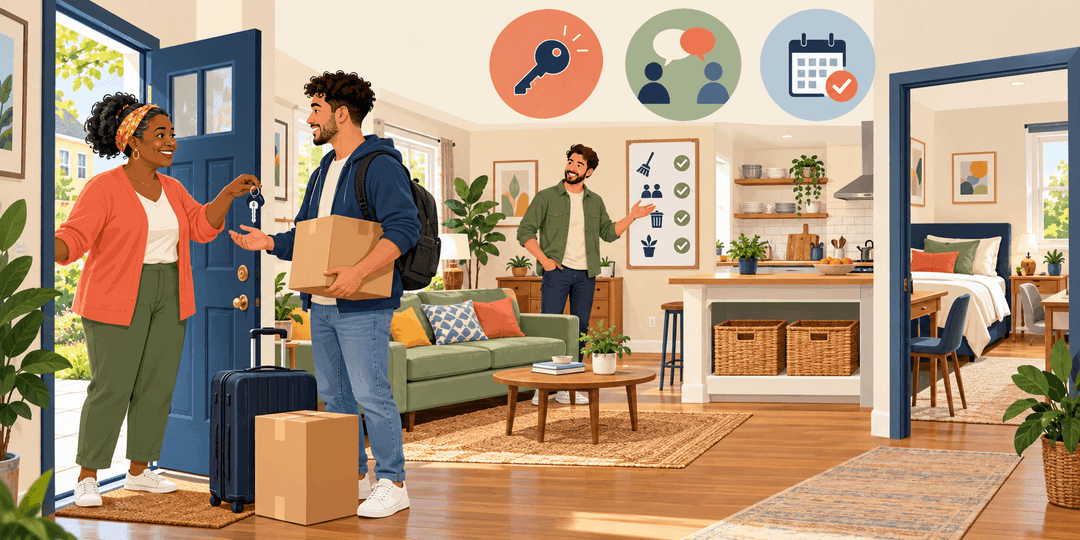
Clear out your own stuff, all of it. A room full of your old boxes says "storage closet," not "home." Give it a deep clean, fix anything broken, and add a few basics if you're offering it furnished: a decent bed, a desk, a lamp, and somewhere to hang clothes. A lock on the bedroom door is a small thing that makes a big difference to how safe someone feels.
For photos, open the curtains and shoot during the day. Stand in a corner so the room looks as big as it really is. Take pictures of the shared spaces too, like the kitchen, bathroom, and living room, because that's where your flatmate will spend half their time. Five or six bright, honest photos beat twenty dark, blurry ones.
Write a listing that sounds like a real person
The best listings read like a friendly note, not a legal document. People are trying to picture their life in your home, so help them.
Cover the basics clearly: the price, what's included, the move-in date, how long you'd like someone to stay, and the nearest transit. Then tell them a bit about the household. "I'm a nurse who works night shifts, so the house is quiet during the day" tells a reader far more than "quiet home."
Be upfront about the things that matter to you. If you don't allow smoking, pets, or overnight guests during the week, say so now. It feels awkward to write, but it saves you from a dozen conversations with people who were never going to be a good fit.
One last tip: reply quickly. The good flatmates are usually talking to several places at once, and the first landlord who answers kindly often wins.
Screen people properly, even the nice ones
This is the part most first-time landlords rush, usually because the first person they meet seems lovely. Lovely is great. Lovely and verified is better.
Start with a short phone or video call before anyone visits. Ten minutes is enough to get a feel for someone and to rule out anyone who dodges simple questions. Then meet in person at the house, ideally with a friend around for your first few viewings.
Here are the questions I'd ask every single person:
- What do you do for work or study, and what are your usual hours?
- Where are you living now, and why are you moving?
- How do you usually split chores and shared costs with flatmates?
- Do you have guests over often? Partners who stay the night?
- Do you smoke, have pets, or plan to work from home?
- How long are you hoping to stay?
Listen to how they answer as much as what they say. Someone who asks you questions back is usually someone who cares about fitting in.
After that, check what you can. Ask for photo ID and confirm the name matches. Ask for a reference from a previous landlord or flatmate, and actually call them. If you're comfortable, a credit or background check is worth it for peace of mind, and plenty of people looking for rooms are happy to do one if it means landing a good place.
And watch for the red flags. Be careful with someone who wants to move in today without seeing the room, offers to pay months upfront in cash before you've even met, won't give you a reference, or gets annoyed when you ask normal questions. A good flatmate understands why you're being careful. Usually, they're doing the same with you.
Put everything in writing
I know. You found someone great, you get along, and a written agreement feels a bit cold. Do it anyway. A written agreement isn't about distrust. It's about making sure you both remember the same deal three months from now.
At a minimum, write down:
- The monthly rent, the due date, and how it gets paid
- The deposit amount and when it comes back
- What's included (utilities, Wi-Fi, parking, laundry)
- How long the arrangement lasts and how much notice either of you needs to give
- The house rules you both agreed on
Rules on deposits, notice periods, and tenant rights differ depending on where you live, and in some places renting a room in a home you share has its own specific rules. Look up the official guidance for your city or state, or use a standard room rental agreement from a trusted local source, rather than inventing your own from scratch.
Keep the money side simple and traceable
Always use a payment method that leaves a record, like a bank transfer or a payment app, and give a receipt for any cash. Agree on how shared costs get split before the first bill arrives, not after. Some households split utilities evenly, others build them into the rent so there's nothing to calculate. Either works, as long as you've both agreed.
Talk about house rules before they're needed
The arguments I hear about most are almost never about rent. They're about dishes, noise, guests, and the thermostat. Sit down together during the first week and talk through the everyday stuff: quiet hours, cleaning shared spaces, how long guests can stay, and what happens with food in the fridge. It takes twenty minutes and prevents months of quiet resentment.
After move-in: be the landlord you'd want
The first two weeks set the tone for everything that follows. Show your new flatmate where things are, introduce them to the neighbors if that's your kind of street, and make it clear the shared spaces are theirs too. People take better care of a home they feel welcome in.
When something bothers you, bring it up early and kindly. "Hey, could we try to keep the sink clear at night?" is an easy conversation in week two. In month four, after weeks of silent frustration, it becomes a fight. A quick check-in once a month, even just over coffee, gives you both a natural moment to raise small things before they grow.
And respect their privacy. You might own the home, but their room is their space. Knock, give notice before you need to go in, and don't treat them like a guest who never left.
The bottom line
Renting out a room can be one of the best decisions you make, both for your finances and, honestly, for your day-to-day life. The landlords who have the best experiences aren't the luckiest ones. They're the ones who priced fairly, screened carefully, wrote things down, and talked openly from the start.
If you're ready to find someone, iROOMit was built for exactly this. You can list your room, chat with people before you meet, and use ID verification and credit checks to know who you're talking to. Take your time, trust your instincts, and don't settle for the first person who replies. The right flatmate is worth the wait.